Differences between dental veneers and crowns
When patients want to improve the appearance of their smile, two treatments are often discussed: dental veneers and dental crowns. Both can change the shape, colour and harmony of the teeth, but they are not the same treatment and they are not used for the same clinical reasons. Understanding the differences between dental veneers and crowns helps patients make more informed decisions and avoid choosing a solution based only on appearance.
Dental veneers are usually thin restorations placed on the visible front surface of the teeth. They are often chosen when the main concern is aesthetic, such as colour, shape, small gaps, minor chips or uneven proportions. Dental crowns, on the other hand, cover the whole visible part of the tooth and are often recommended when the tooth needs more structural protection, for example after significant damage, large restorations, fractures or root canal treatment.
At My Dental Clinic in Dubai, every smile treatment starts with a careful diagnosis. The goal is not simply to create a beautiful smile, but to choose the most appropriate, safe and long-lasting solution for the patient’s teeth, gums and bite. In this article, we will explain the aesthetic differences between veneers and crowns, when each option may be suitable, how they affect the natural tooth, why DIY cosmetic solutions should be avoided and how a dentist can guide the patient towards a balanced result.
H2 What are the main differences between dental veneers and crowns?
The main differences between dental veneers and crowns begin with how much of the tooth they cover. A dental veneer usually covers only the front surface of the tooth, the part that is visible when the patient smiles. A crown covers the entire visible portion of the tooth, surrounding it like a protective cap. This difference is very important because it affects the level of tooth preparation, the final appearance, the strength of the restoration and the clinical reason for choosing one treatment rather than the other.
From an aesthetic point of view, veneers are often used when the tooth is generally healthy but needs improvement in shape, shade or proportion. For example, a patient may have front teeth that are slightly worn, uneven, narrow, chipped or resistant to whitening. In these cases, veneers can help create a more harmonious smile while preserving as much natural tooth structure as possible, when clinically suitable.
Crowns can also look very natural and beautiful, but they are usually considered when the tooth needs more support. If a tooth has a large filling, a fracture, significant wear or previous treatment that has weakened it, a crown may provide better coverage and protection. In these cases, the aesthetic result is still important, but the treatment also has a stronger restorative purpose.
At My Dental Clinic, the choice is never made only by looking at the smile from the outside. The dentist evaluates the tooth structure, enamel, bite, gum health and patient expectations before recommending the most appropriate option.
How do veneers and crowns look different in the smile?
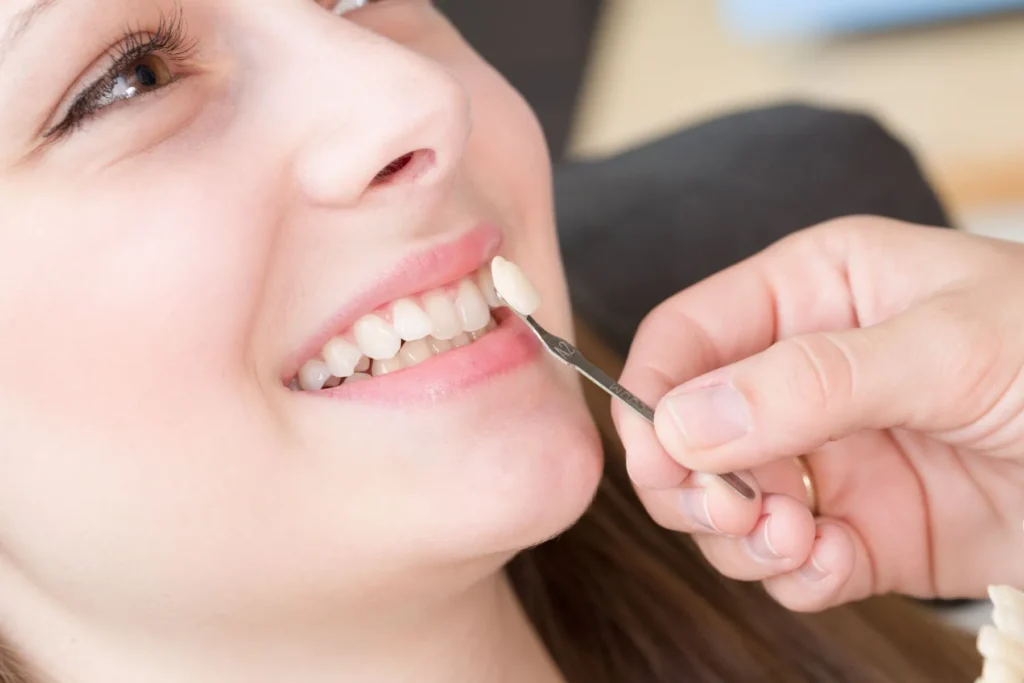
Modern dental veneers and crowns can both be designed to look natural, but they achieve aesthetics in slightly different ways. Veneers are often associated with subtle smile enhancement because they are thin and mainly influence the visible front surface of the teeth. They can improve colour, symmetry and tooth proportions while maintaining a delicate, light-reflecting appearance when planned correctly.
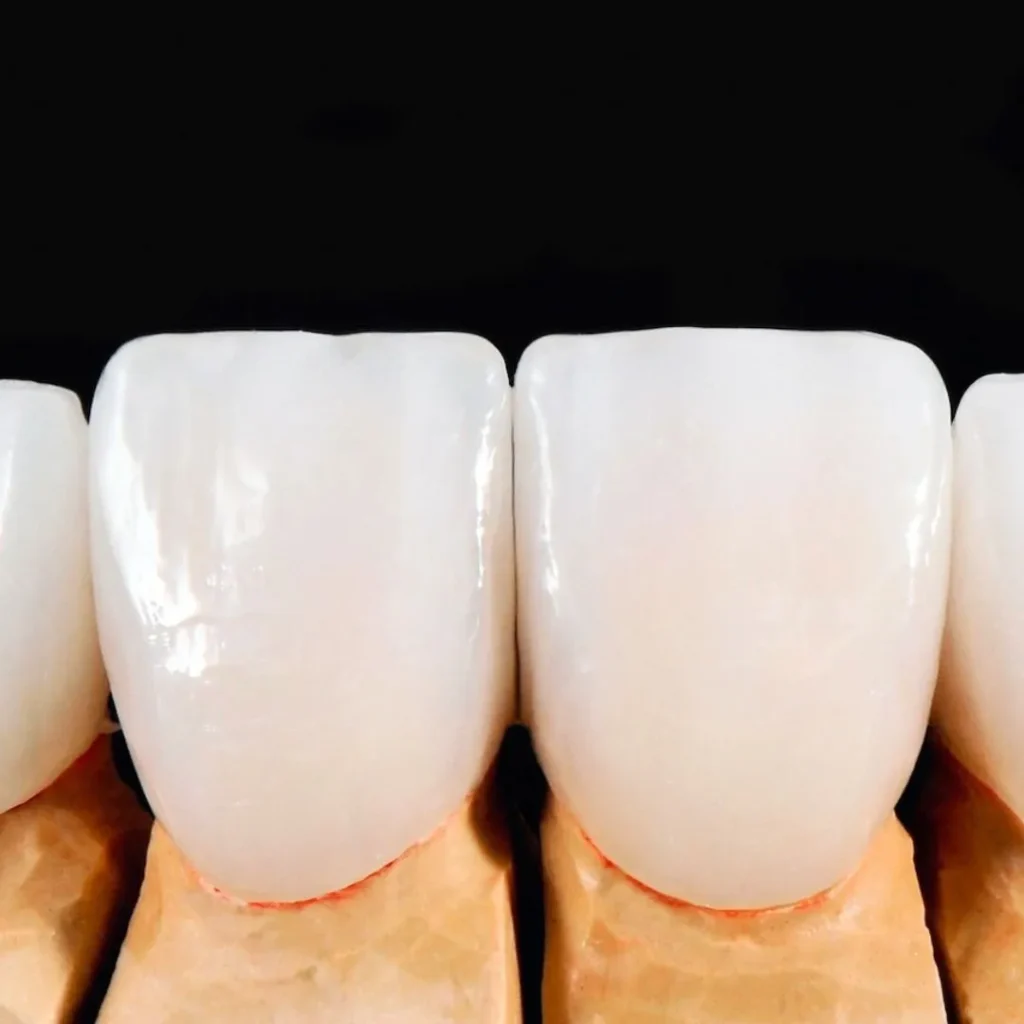
Crowns can also be highly aesthetic, especially when made with modern ceramic materials. However, because they cover the whole tooth, they are often used when the dentist needs to restore both beauty and strength. A crown may be the better option when the tooth underneath is dark, heavily restored, cracked or structurally compromised. In these situations, a dental veneer may not provide enough coverage or support to create a stable result.
The aesthetic differences between dental veneers and crowns also depend on the starting point. If the natural tooth colour is already quite even and the tooth is healthy, veneers may be enough to create the desired improvement. If the tooth has old restorations, deep discolouration or damage on several surfaces, a crown may allow the dentist to control the final shape and shade more completely.
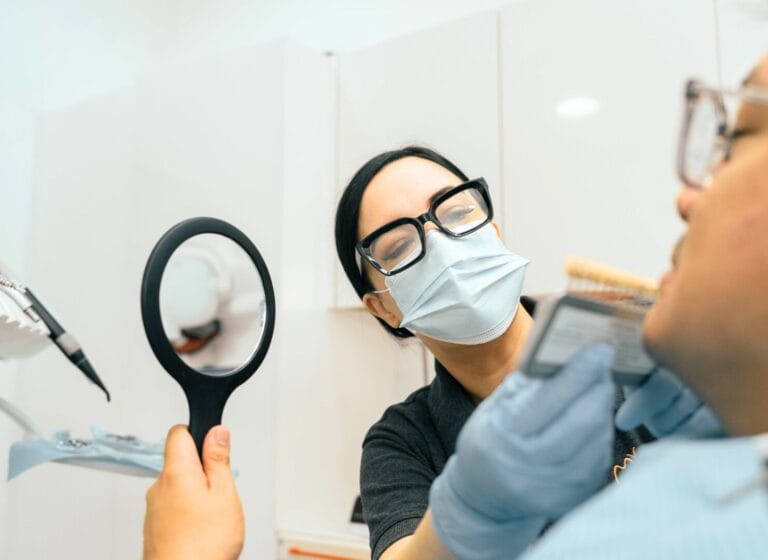
A natural-looking result depends on details such as translucency, edge shape, gum contour, tooth length and how the restoration blends with the surrounding teeth. At My Dental Clinic, digital planning and careful communication help patients understand what can realistically be achieved before treatment begins.
Can veneers and crowns both improve tooth colour?
Yes, both veneers and crowns can improve tooth colour, but they do so in different clinical situations. Dental veneers are often chosen when patients want a brighter, more even smile and their natural teeth are healthy enough to support a conservative aesthetic restoration. They can mask stains, mild discolouration or uneven shades, especially when whitening alone cannot achieve the desired result.
Crowns can also change tooth colour, but they are usually selected when the tooth requires more coverage. For example, a tooth that has become very dark after trauma or previous dental treatment may need a crown if the discolouration is too deep or if the tooth structure is weakened. A crown gives the dentist more control over the final colour because it surrounds the tooth rather than covering only the front.
One important point is that neither veneers nor crowns can be whitened like natural teeth after they are placed. Their colour is chosen during the planning stage. This is why patients should avoid DIY whitening methods or online “hacks” before or after treatment. Abrasive powders, acidic mixtures and unverified whitening products can irritate gums, damage enamel and create uneven colour between natural teeth and restorations.
When discussing the differences between dental veneers and crowns, colour planning is essential. The dentist must evaluate the natural teeth, existing restorations, gum line and patient expectations. Sometimes professional whitening may be recommended before veneers or crowns are made, so the final shade can be planned around a healthier and more stable colour.
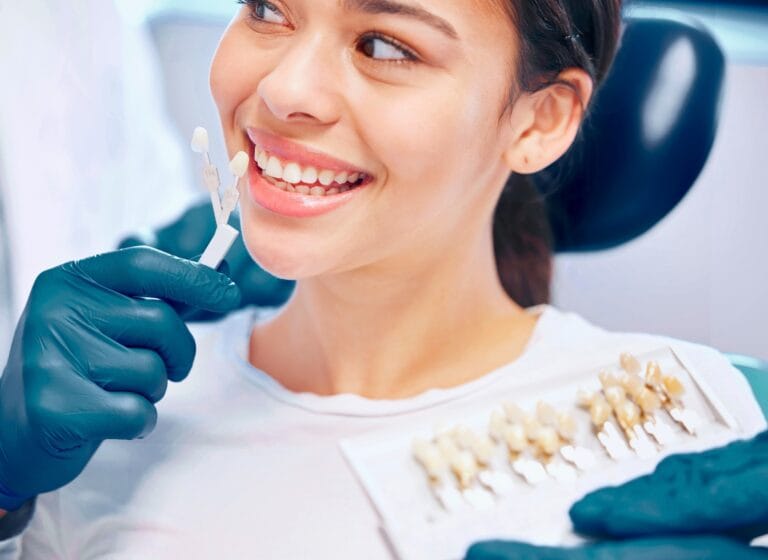
At My Dental Clinic, shade selection is approached carefully to create a smile that looks fresh, balanced and natural, rather than artificial.
Why does tooth preparation differ between veneers and crowns?
Tooth preparation is one of the most important differences between dental veneers and crowns. A dental veneer usually requires less preparation because it is placed mainly on the front surface of the tooth. In suitable cases, the dentist may only need to create enough space for the veneer to sit naturally without making the tooth look bulky. The aim is to preserve healthy tooth structure as much as possible.
A crown usually requires more preparation because it covers the whole visible part of the tooth. The dentist must shape the tooth so the crown can fit securely and comfortably over it. This is often necessary when the tooth has already lost a significant amount of structure or needs protection from chewing forces. The preparation is therefore linked to the condition of the tooth, not only to aesthetics.
This is why patients should not choose veneers or crowns based only on photos they see online. Two smiles may look similar from the outside, but the teeth underneath can be completely different. One patient may be suitable for dental veneers, while another may need crowns because of cracks, large fillings, bite pressure or previous dental treatment.
A careful diagnosis protects the patient from overtreatment and undertreatment. Overtreatment means removing more tooth structure than necessary. Undertreatment means choosing a restoration that looks attractive at first but does not provide enough strength or coverage for the tooth.
At My Dental Clinic, the planning process is designed to respect both aesthetics and biology. The dentist explains why a certain preparation is needed and how the chosen treatment supports the long-term health of the smile.
How does the condition of the natural tooth influence the choice?
The condition of the natural tooth strongly influences whether a veneer or a crown is more suitable. A dental veneer is generally considered when the tooth has enough healthy enamel and does not need full coverage. It may be appropriate for teeth with minor chips, small shape concerns, slight wear or colour issues that affect mainly the visible surface.
A crown may be more suitable when the tooth has been weakened. This can happen because of a large cavity, a large existing filling, a fracture, heavy wear, root canal treatment or structural damage. In these cases, covering the whole tooth may help protect it from further damage while also improving its appearance.
This is one of the most practical differences between dental veneers and crowns: veneers are often more aesthetic and conservative, while crowns are often aesthetic and protective. However, the final recommendation always depends on the individual patient. A healthy front tooth may not need a crown, while a compromised tooth may not be safely restored with a veneer alone.
Gum health is also important. Inflamed gums can affect the accuracy of impressions or scans, the fit of the restoration and the final appearance of the gum line. Before placing veneers or crowns, the dentist may recommend professional hygiene or gum treatment to create a healthier foundation.
At My Dental Clinic, treatment is never planned in isolation. The team evaluates the whole mouth, including the bite, neighbouring teeth, gums and patient habits. This helps create a result that looks good and functions comfortably.
Can veneers and crowns both look natural?
Yes, dental veneers and crowns can both look natural when they are carefully planned and made with suitable materials. A natural result depends on much more than simply choosing a light shade. The dentist must consider the patient’s face, lips, gum line, tooth proportions, age, personality and the way light reflects from the restorations.
Veneers can look very natural because they are thin and can mimic the translucency of enamel. They are often used on front teeth where small details make a big difference. The shape of the edges, the surface texture and the relationship between the teeth all contribute to the final smile.
Crowns can also be made to blend beautifully with natural teeth. This is especially important when only one or two teeth are being treated, because the crown must match the surrounding teeth in colour, brightness and shape. When several teeth need restoration, crowns can also be used to rebuild a more harmonious smile.
The aesthetic differences between dental veneers and crowns are not about one being beautiful and the other being unattractive. Both can be excellent aesthetic solutions when used for the right reason. The real difference is in how they interact with the natural tooth and how much support the tooth needs.
At My Dental Clinic, digital tools can help patients preview and discuss smile goals before treatment. This does not replace clinical judgement, but it helps the dentist and patient communicate clearly. The aim is always to create a result that feels like the patient’s own smile, only more balanced and confident.
Why should you avoid DIY cosmetic dental solutions?
DIY cosmetic dental solutions can be risky, especially when patients are considering changes to tooth shape, colour or alignment. Online products and home techniques may promise fast aesthetic results, but they cannot diagnose the condition of the teeth, gums or bite. This can lead to damage, discomfort and results that are difficult to correct.
Patients should never file their own teeth, use non-dental bonding materials, apply household whitening mixtures or try to reshape old restorations at home. Enamel does not grow back, and even a small amount of incorrect filing can create sensitivity, rough edges or bite problems. Home glues and temporary cosmetic materials can irritate the gums, trap bacteria and damage natural teeth.
DIY whitening is also a common issue. Veneers and crowns do not whiten like natural enamel, so using strong or abrasive products may create uneven colour rather than a better smile. If a patient already has restorations, the dentist should evaluate whether whitening, replacement or another treatment is appropriate.
Understanding the differences between dental veneers and crowns requires professional assessment. A patient may think they need veneers because they dislike the colour of a tooth, but the real issue may be decay, an old filling, trauma or gum recession. Without diagnosis, the wrong solution may hide a problem instead of treating it.
At My Dental Clinic, patients receive clear, simple explanations and safe treatment options. A dentist-led plan protects the teeth while improving aesthetics, which is always better than experimenting with unverified methods.
How does bite and function affect veneers and crowns?
Bite and function are essential when choosing between veneers and crowns. A smile must not only look good in photos; it must also work comfortably when the patient speaks, chews and closes their teeth together. If the bite is not considered, even a beautiful restoration may chip, loosen or feel uncomfortable.
Veneers are thin and rely on proper bonding to healthy tooth structure. They can be very strong when used correctly, but they are not designed to handle uncontrolled forces. Patients who grind or clench their teeth may need additional protection, such as a custom nightguard, or a different treatment plan depending on the level of wear and pressure.
Crowns provide more coverage and may be better suited for teeth that need reinforcement. However, crowns also need careful bite adjustment. If a crown is too high or receives too much force, it can cause discomfort, sensitivity or stress on the tooth and surrounding tissues.
One of the key differences between dental veneers and crowns is how they distribute and tolerate chewing forces. The dentist must evaluate not only the front view of the smile, but also how the teeth meet during normal movement. This is especially important in patients with worn teeth, jaw tension, headaches or signs of bruxism.
At My Dental Clinic, aesthetic planning includes function. The aim is to create restorations that support a natural-looking smile while respecting the way the mouth moves. A comfortable bite is part of a successful aesthetic result.
When are veneers more suitable than crowns?
Veneers may be more suitable than crowns when the tooth is generally healthy and the main concern is aesthetic. For example, a patient may want to improve the shape, length, symmetry or colour of the front teeth without needing full coverage. In these cases, veneers can offer a conservative and natural-looking solution, provided there is enough healthy enamel and the bite is suitable.
Veneers may be considered for small chips, mild wear, slight gaps, minor irregularities or teeth that appear too small compared with the rest of the smile. They can also be useful when the patient wants a more harmonious smile but does not need extensive structural repair.
However, veneers are not suitable for every patient. If a tooth has a very large filling, significant decay, severe fracture or not enough enamel, a veneer may not provide enough strength or retention. If the patient has heavy grinding habits, the dentist must evaluate whether veneers can be protected or whether another treatment is safer.
The differences between dental veneers and crowns become clear in this situation: veneers are often preferred when preservation is possible, while crowns are chosen when protection is necessary. The dentist’s role is to recommend the option that respects the tooth and supports long-term health.
At My Dental Clinic in Dubai, veneer cases are planned with attention to detail, comfort and natural aesthetics. The patient’s expectations are discussed carefully, and the final plan is adapted to the patient’s smile, not copied from a standard model.
When are crowns more suitable than veneers?
Crowns may be more suitable than veneers when a tooth needs more protection, coverage or rebuilding. If a tooth has lost a large amount of structure, has a deep crack, has been heavily restored or has undergone root canal treatment, a crown may help restore both function and appearance.
A crown can improve aesthetics while also protecting the tooth from further damage. This is important because a compromised tooth may not be strong enough to support a veneer. In these cases, choosing a veneer only for aesthetic reasons could leave the tooth vulnerable.
Crowns may also be useful when the tooth is severely discoloured and the colour cannot be masked predictably with a thinner restoration. Because a crown covers the whole tooth, it can offer more control over the final shade and shape. However, the dentist must still plan the treatment carefully to avoid an artificial appearance.
The differences between dental veneers and crowns are therefore not only about how they look, but about what the tooth needs. A crown may be the more responsible choice when the tooth requires full support. A veneer may be too limited if the underlying structure is weak.
At My Dental Clinic, crowns are planned with the same aesthetic attention as veneers. The goal is to restore the tooth in a way that blends with the smile, feels comfortable and supports chewing. Patients are guided through the reasons for the recommendation, so they understand why a crown may be the healthier option in their specific case.
Conclusion on the differences between dental veneers and crowns
The differences between dental veneers and crowns are important because each treatment has a different purpose. Veneers usually cover the front surface of the tooth and are often chosen for aesthetic improvements when the natural tooth is healthy enough. Crowns cover the whole visible part of the tooth and are often recommended when the tooth needs more protection, strength or structural rebuilding.
Both treatments can create beautiful, natural-looking results, but only when they are selected for the right clinical reasons. A veneer is not automatically better because it is more conservative, and a crown is not automatically better because it covers more. The correct choice depends on the tooth condition, enamel, gum health, bite, colour, patient habits and long-term goals.
Patients should avoid DIY cosmetic solutions, home filing, unverified whitening methods or temporary online fixes. These approaches can damage teeth and gums and may make future treatment more complex. A safe aesthetic result always begins with diagnosis and professional planning.
At My Dental Clinic in Dubai, patients are guided with a simple, empathetic and personalised approach. The team takes time to explain the options, evaluate the smile and recommend a treatment plan that supports both appearance and oral health.
If you are considering veneers or crowns and want to understand which option is more suitable for your smile, contact the clinic to book an appointment and receive personalised guidance.
Visit My Dental Clinic at Al Thanya Street 61, Umm Suqeim 2, Dubai